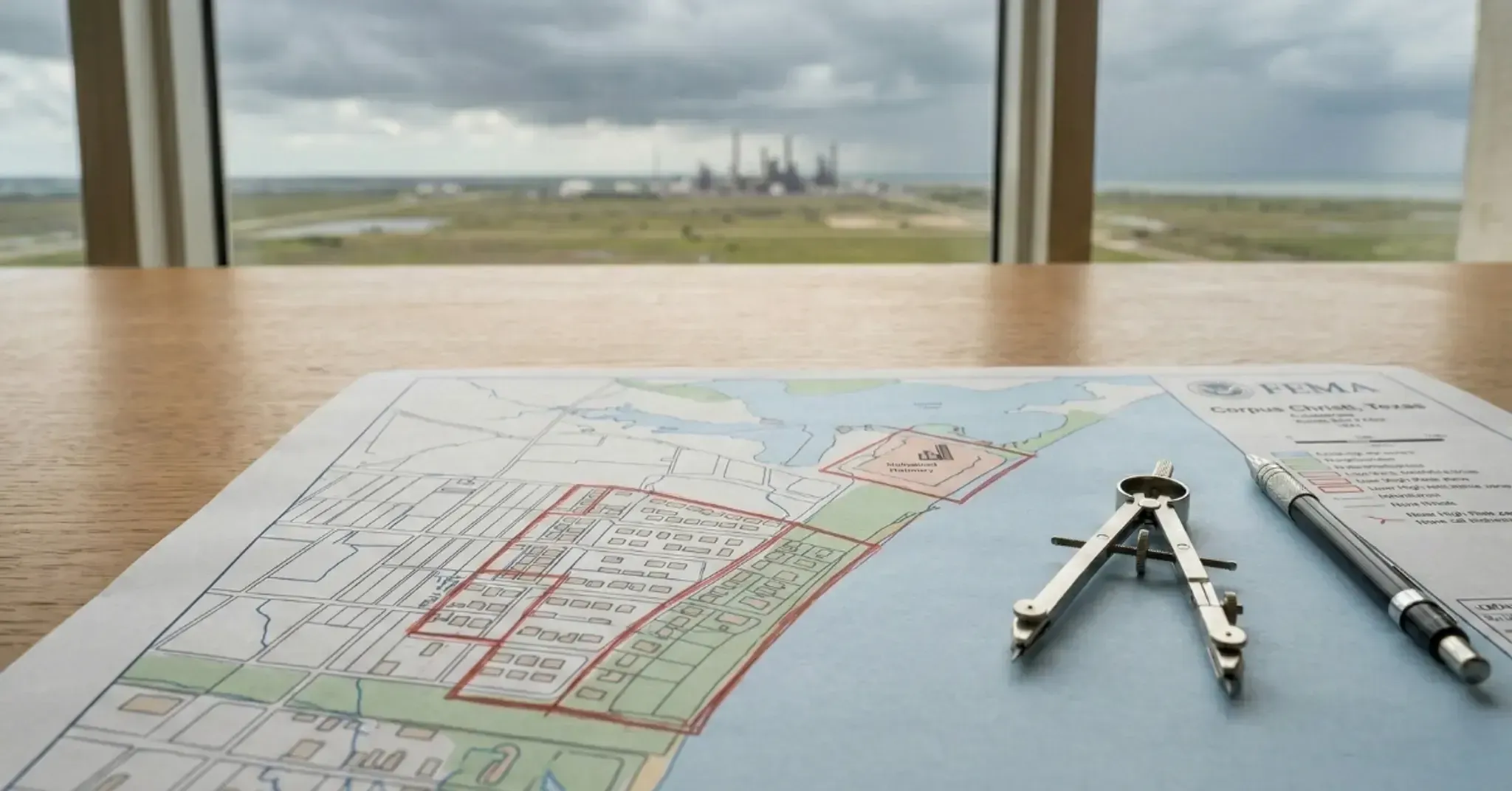

Key Highlights
-
Fort Worth's black clay gets bigger by 12% when wet. This can break foundations and leave spaces for water to get in.
-
SB 1255 (starting September 2025) says each on-site inspector must have their own TDLR license.
-
A mold test costs between $500 and $800 (more for extensive inspections). This is from over 600 jobs done in the area.
-
The Trinity River floodplain means there is a higher risk in Riverside, Meadowbrook, and Haltom City.
Fort Worth is growing fast. There are new subdivisions, new buildings, and new neighborhoods moving into places where the soil is not good. The black clay here is tricky. It doesn't matter what zip code you are in, the soil stays the same.
This clay soil swells up when it gets wet. It shrinks again when it dries out. Every time this happens, cracks in the foundation get a little bigger. Water finds its way through these cracks. It can move through the slab edges and small spaces made for pipes and other parts. By the time you notice a bad smell in a room, that mold has probably been growing there for several weeks.
Crawlspaces under pier-and-beam homes near the Trinity River keep moisture in for the longest time. Stains on the surface can take weeks to show up. General home inspectors will not see this. They do not use moisture meters. They also do not have TDLR licenses. You need someone with a license for mold checks who knows how Fort Worth's soil changes each season..
Fort Worth Soil Means Constant Movement
Black clay makes things tough for any Fort Worth mold expert. It gets bigger and smaller with every rain or dry stretch. Cracks in the slab are common. Foundation gaps open wide or close on their own, and water gets in through places that were not open just six months before. Water moves through cracks that you cannot see, and it can get around places that were sealed the right way when the house was built. It also enters crawlspaces under older homes with piers and beams that did not get fully sealed from vapor.
A good inspection will use a moisture meter. This tool helps to find places that are damp in HVAC drain pans. People will also check near slab edges. It is used at crawlspace rim joists and behind inside walls.
The air samples are sent to a lab. Surface swabs and tape lifts are used to show what kind of mold is there.
The report shows the exact spots where water comes in. It also shows what is growing in these spots.
Texas law is clear about what should be in that report. There should be moisture readings shown on the floor plan, photos of every area where samples were taken, mold types found from lab results, and spore counts that are compared with the air outside. A licensed MAC must sign the plan to clean up. If you do not have this signed plan, no cleanup crew can start to work by law.
In Fort Worth, the main problems for your home are slab cracks. Another big issue can be water from your air system and wet spots under the house going up into rooms where you live. Someone who understands clay dirt will know where to look first.
Top Rated Mold Testing Companies in Fort Worth
1. FastMoldTesting.com
Website: fastmoldtesting.com/fort-worth
Turnaround Time: ✅ 1 to 2 business days
Value for Money: 5/5 ⭐⭐⭐⭐⭐ (Exceptional)
Testing is offered in Fort Worth and the bigger DFW area. You can book for the same day or the next day. Each test checks for wet spots, air samples, and things on the surface. A MAC-signed plan for clean up is included. You will get lab results and reports back in one or two business days. This is one of the fastest ways to get these results in the state.
Their inspectors understand how DFW clay soil moves and acts. They know the spots that need to be checked first when you see slab cracks or movement in the foundation. Since they do not clean up after, they do not make more money by saying the problem is bigger than it is.
✅ Benefits:
-
You get lab results and reports in just 1 to 2 business days, which is one of the fastest times in Texas.
-
They do testing only and do not offer any cleanup services, so there is no conflict of interest.
-
You can book for the same-day or next-day in Fort Worth and DFW.
-
A full check for moisture, air sample tests, and a cleanup plan signed by MAC are all included.
-
The team knows the local area well, including black clay soil and the way slab cracks show moisture.
❌ Disadvantages:
-
Does not do mold clean-up (this is a rule to keep the reporting fair for all)
🟢 Best for: People who want to sell or buy a place in Fort Worth, renters who need to show the state of a home, or owners who see problems with the foundation or cracks in the floor.
2. Texas Mold Testing
Website: texas-mold-testing.com
Turnaround Time: Call for estimate
Overall Rating: 5/5 ⭐⭐⭐⭐⭐
They have been in DFW for fifteen years and use a Fort Worth area code. Their TDLR license is on file. They do mold checks, plus they have EPA Lead Safe Contractor and OSHA asbestos certifications. This helps with old homes where several risks can show up at the same time. They do testing only, not cleanup.
Homes built before 1980 are common in Fairmount, Ryan Place, and the older Northside areas. When you need to check for both mold and asbestos, this firm can take care of both in one visit. You do not have to book two different appointments.
✅ Benefits:
-
15 years of DFW work with strong local knowledge
-
EPA Lead Safe Contractor and OSHA asbestos certifications for buildings with more than one risk
-
Only testing is done, with no conflict from cleaning up
-
Based in Fort Worth, with a local 817 area code and TDLR license on file
❌ Disadvantages:
-
Turnaround time is not shared online. You have to call to get an idea about it.
-
The price is not as clear as other flat-rate companies in the area.
🟢 Best for: Homes built in Fort Worth before the 1980s, where the, mold, and asbestos may be a problem at the same time. It is good for homes with more than one issue, when you want both checked in one visit.
3. Mold Testing Fort Worth

Website: moldtestingfortworth.com
Turnaround Time: Call for an estimate
Overall Rating: 5/5 ⭐⭐⭐⭐⭐
What sets this firm apart is its flat-rate pricing. For homes up to 2,500 square feet, the cost is $500. This includes two samples, checking all over for moisture, and getting a full report. For bigger homes, you add $0.10 for each extra square foot. A re-test to check if the problem is fixed costs $375 every time. The inspection also includes heat imaging, so Ethan can find wet spots inside the walls without the need to break them open.
You will know the cost before he gets there. He does testing only. There is no cleanup and no extra charges you don’t see.
✅ Benefits:
-
The price is set at $500 for homes up to 2,500 sq ft. There are no hidden costs.
-
The home check always comes with a heat check at no extra cost.
-
The set rate for testing after cleanup is $375.
-
We only test. We do not clean up, so there is no mix-up.
-
If your home is bigger, you get clear per-square-foot prices.
❌ Disadvantages:
-
There is only one licensed person to do the check. The number of checks may be low when many people ask after a flood.
-
How long it takes will change. You should make sure the person is free before you book.
🟢 Best for: People who want to save money, those who want to know what they will pay before they set a time, homes where heat-sensing tools are used to find water behind walls.
4. Mold Inspection and Testing (MI&T)

Website: moldinspectionandtest.com
Turnaround Time: 3 to 5 business days
Overall Rating: 4/5 ⭐⭐⭐⭐
A national company has licensed inspectors who work in Fort Worth. They check every part of the house, from the attic to the crawlspace. No area is left out. A lab that is not connected to the company gets the samples to test. A written cleanup plan comes with every job. The company has credentials from five different groups: AIHA, InterNACHI, NORMI, IAC2, and ESA. This means their reports can help you if you are talking to an insurance adjuster or have a legal issue.
The tradeoff for having that much detail in the paperwork is that things go slower. It can take about three to five days for DFW to finish, which is a long time. Since they use the same process across the country, the inspectors stick to a list of rules. They do not always know about Fort Worth’s clay soil.
✅ Benefits:
-
The company has several independent credentials, including AIHA, InterNACHI, NORMI, IAC2, and ESA.
-
They check every place, from the attic to the crawlspace, on every job and do not miss any areas.
-
They do tests only. They do not handle any cleanup, so there is no conflict.
-
Their reports are made to support you in insurance claims and legal disputes.
❌ Disadvantages:
-
The time to get your results is about 3 to 5 days. This can be slower than other Fort Worth local competitors.
-
This is a national firm, so they do not have as much special knowledge about how Fort Worth clay soil acts.
🟢 Best for: Property managers, investors, people who work with insurance claims, and anyone who needs more than one type of proof that can stand up under a close check.
5. Dallas Mold Inspection Group (DMIG)
Website: dallasmoldinspectiongroup.com
Turnaround Time: Call for estimate
Overall Rating: 4/5 ⭐⭐⭐⭐
Seven years in business in Fort Worth, Dallas, and across the DFW Metroplex. They have EPA and OSHA credentials. They do testing only and do not do cleanup work. When they finish the job, they give you the Certificate of Mold Damage Remediation. This is a legal paper you need for real estate closings in Texas. They send cleanup jobs to other contractors. After that, they come back for testing when the job is done. They manage the full process, making sure each step is covered from start to finish.
The size of the Metroplex is good for investors who have properties in more than one city. The company is based in Dallas. This means what they know about Fort Worth neighborhoods is not as strong as a company that is local.
✅ Benefits:
-
Seven years of work in the DFW area. We cover Fort Worth, Dallas, and the Metroplex.
-
Gives a Certificate of Mold Damage Remediation. You get it for real estate closings.
-
We do testing only and there is no cleanup conflict.
-
We help with the full process. This starts with testing and keeps going through post-clearance checks.
❌ Disadvantages:
-
The turnaround time is not shared with the public. You need to call them to get an idea.
-
This company is based in Dallas. It may not know Fort Worth neighborhoods as well.
🟢 Best for: Homeowners who are getting ready to sell the place, and for people who need papers that show they have the right approval for a real estate closing.
What to Check Before You Hire
Check the license first. dlr.texas.gov/mld has every active license, its status, and when it will end. If they do not have an active TDLR license, they are working against Texas law.
Testing only. If a company sells cleanup work too, they can make more money if they find mold. Texas law says the one who checks and the one who cleans up must be different. This is the rule for this reason. Do not choose someone who can gain from both jobs.
DFW clay soil know-how. This is more important than it seems. Slab cracks can open or close during different times of the year. Foundation movement happens a lot in Fort Worth. Someone who does not have practice with clay soil may not know where to look first. Ask them right away about slab edge water and pier-and-beam crawlspaces.
You should have a written cleanup plan ready before any work begins. A licensed MAC has to sign it first. Without this, the cleanup team can't start. If the company can’t promise to give you this paper, look for another one that can.
Ask the price upfront. Ask them to give you a written quote. The quote should show the cost for the inspection, samples, lab fees, and sending the report as separate parts. A price that says "starting at" is not a real quote. Make sure you know the full amount before they come.
The Dual-License Problem
Texas law says that one company cannot do both the checking and fixing on the same job. The reason is simple. A business that gets paid for cleanup has a strong reason to "find" mold that needs to be cleaned up. This can lead to problems before the person even looks in your home.
Some companies try to get around the rules by saying they are two different businesses. But if they have the same owner, the same address, and the same phone number, they are not really two businesses. They are just saying it on paper. If a company says they play both parts, ask them to show two TDLR license numbers and proof that they are really two businesses. If they do not have both, it's best to leave.
Timeline and Costs
The on-site part of the inspection takes about 60 to 90 minutes. The lab may take 1 to 2 business days to finish, based on the lab and if you pay more to do it faster.
Your report has to show moisture readings on the floor plan. Add photos of every place sampled. Be sure to write which type is found from lab testing. There should also be spore counts next to what is in the air outside. A cleanup plan in writing, signed by a licensed MAC, must be added. If you do not have the outdoor air sample or the signed cleanup plan, your report will not meet the legal rules in Texas.
Track Record and Reviews
Google and Yelp reviews can help you know if the inspector will be ready and give you a clear report on time. When you read reviews, look for common themes. A star rating is good, but it is better to read several reviews with the same words like "thorough," "explained findings," and "professional." These words tell you more than just one great review. See if people talk about the inspector going over results with them in person, too.
Don't pay attention to reviews that talk about price only. A low-cost inspection with an incomplete report will not help you when you need help the most.
For real estate deals, ask right away, "Have you taken care of Fort Worth clay soil moisture cases?" A person who has worked with Fairmount basements or Meadowbrook slabs will look at different things. They will not use the same standard checklist used by someone from another place.
Taking Action
The soil in Fort Worth can be a problem. Clay in the ground moves. This can make foundations crack. Water gets in through small gaps. These gaps open and close when seasons change. General home inspectors do not find these problems. They do not use moisture meters. They also do not have TDLR licenses.
Get a licensed person to check things before there is a fight, a lost sale, or someone complains about health. It costs much less to have an inspection done now. Waiting could bring bigger problems.
Book Fort Worth testing for same-day or next-day help. The testing covers tests only, not cleaning. There is no problem with other work.
Frequently Asked Questions
You can do a DIY mold test in Texas. But the results will not be valid for legal cases, insurance claims, or when handling cleanup steps. A licensed assessor is needed to give a report before any cleanup team can start work in a legal way.
Do I have to say if there is mold when selling? Yes. Texas Property Code Section 5.008 says you must tell about problems you know about, and this includes mold. If you do not say there is mold, you could have legal trouble after the sale. A good pre-listing inspection report helps keep you safe.
How do I see if a Fort Worth inspector's license is valid? Before you pay, make sure they have an active TDLR license at tdlr.texas.gov/ml. Look at the license type, if it is active, and when it runs out.
What did SB 1255 change?
Starting in September 2025, every onsite inspector will need to have their own TDLR license. Before this, only people who were the boss had to get one. Be sure to ask for the inspector's license number, not just the company's license.
When should I schedule testing after cleanup?
Wait for 1-2 business days after cleanup is done. This gives time for anything in the air to settle. A licensed MAC will then take samples and compare the new results to the ones from before cleanup. In Texas, a licensed MAC must do this testing, not the contractor who did the cleanup.
Key References
-
Texas Occupations Code Chapter 1958 governs mold assessors
-
TDLR Mold Assessors Program maintains the license verification database
-
Fort Worth Mold Inspection Cost Data from Homeyou 2026 project database
Fort Worth Clay Soil and Foundation Impact from Maestro's Foundation Repair
Frequently Asked Questions
- What makes a Fort Worth mold testing company stand out as a top provider?
- Top Fort Worth mold testing companies hold Texas TDLR mold assessment certification, use AIHA-accredited laboratories, collect outdoor control air samples with every inspection, perform moisture mapping with calibrated equipment, and operate independently from remediation services. Fast Mold Testing meets all of these criteria for Fort Worth inspections starting at our transparent rate with results in 1 to 2 business days.
- What specific mold risks in Fort Worth require professional testing to detect?
- Fort Worth-specific mold risks requiring professional testing include HVAC condensate drain clogs that overflow into wall cavities and attic spaces, slab foundation moisture from the region's expansive clay soil, attic mold from inadequate ridge and soffit ventilation common in North Texas construction, and storm-related moisture intrusion from the area's severe hail and tornado events. Each requires moisture mapping equipment to locate accurately.
- How much does a professional mold inspection cost in Fort Worth?
- Professional mold inspections in Fort Worth from TDLR-certified assessors typically cost between $500 and $800 (more for extensive inspections). Fast Mold Testing starts at our transparent rate with results in 1 to 2 business days. The inspection includes moisture mapping, outdoor-controlled air sampling, and a TDLR-certified written report that meets Texas insurance, real estate, and legal documentation standards.
- Does Fast Mold Testing serve all of Fort Worth and Tarrant County?
- Yes, Fast Mold Testing serves Fort Worth and the broader Tarrant County area including surrounding communities. Their TDLR-certified inspectors are experienced with North Texas construction types and the moisture patterns specific to the DFW climate, including the summer humidity and severe storm events that drive the region's most common mold problems.