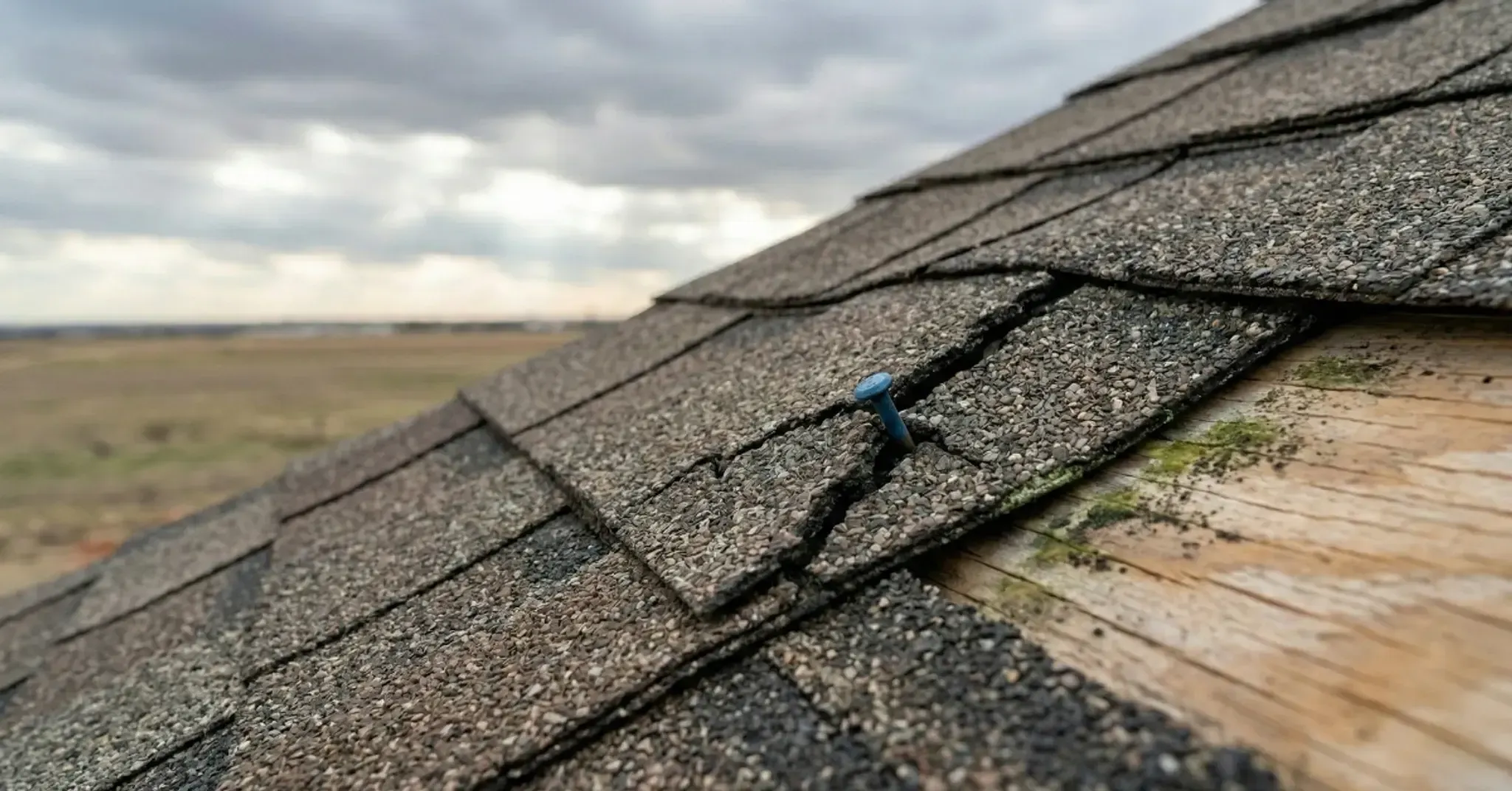

In April, there was a hailstorm where you live in Oklahoma City. A claims adjuster came, and your roof was fixed. After the repairs, the insurance claim was closed. Now it is fall. You notice a musty smell in your upstairs hallway. You also see a new stain on your bedroom ceiling that was not there before.
The hail damage and the mold smell go together. Water got past the flashing when the storm hit. It has been making the insulation and drywall wet for months.
Most people who own a home in Oklahoma have one year, starting from the day they lose something, to send in another claim. This means that there is not much time left. Mold testing in OKC costs between $500 and $800 (more for extensive inspections). Fast Mold Testing begins at our transparent rate, and you can get the results in 1 to 2 business days.
Why Hail Damage and Mold Don't Show Up at the Same Time
Hail can hurt a roof, and you can see this damage soon after the storm. You might see dents on the ridge cap. There could be split shingles and cracked flashing too. But, mold from that damage does not show up right away.
Water gets in through the break. In spring and summer, the attic in Oklahoma can get very hot. That heat slows down the way mold grows. The water stays in the insulation and wood, hidden. This is because the attic is too warm for the mold to spread fast.
Then fall arrives. The temperature goes down. The attic gets cool.
The moisture has been there for many months. Now, the conditions are right for things to start to grow where it is wet. A smell starts to come up in September or October. The claim was made back in April.
This is not unusual. This is the usual timing for hail-related attic mold in Oklahoma. When the homeowner starts to notice the smell and links it to the storm, several months have gone by. Most of the quick repair contractors are gone by then.
What Your Policy Actually Says About the Filing Window
Most home insurance plans in Oklahoma use the Insurance Services Office HO-3 form. This HO-3 form lets you have one year from when the damage happens to file a claim or add more to your claim. Still, some companies give you less time. Some older plans from carriers let you have only six months to file.
The main word here is "supplement." If you have already made a claim for damage to the roof, you may still add another claim for mold. The mold must have come from the same storm. The storm is the thing you are covered for. The mold happened because of that.
Whether or not this idea makes sense will depend on what your policy says and how your insurance company sees it. If you have good paperwork that shows the mold came from the storm, your case will be much better.
The Oklahoma Insurance Department gives guidance on storm claims for people who own a home. It helps you know what steps you can take and what your choices are.
How a Mold Report Connects the Damage to the Storm
An insurance adjuster who looks at an extra claim has to know two things. First, there is mold. Second, the mold is from the storm. It did not come from some other place.
A mold report on its own can show the first point. For the second point, you need a report that tells you where the mold is and what water problem is helping it grow.
Mold growing in the attic on the roof decking, by a ridge seam, or near a rafter close to where something goes through the roof shows what happened. The mold did not start because of a leak from a pipe or from a humidifier. The mold was from outside.
A good mold inspector will write down how the mold grows and check for moisture near it. The report will include what type of mold is found since some are from water that comes from outdoors. It also says where the mold is found in relation to the roof. This is the way they connect the mold to the hailstorm.
An adjuster who sees "Stachybotrys growth along north rafter, active moisture at decking, consistent with roof damage" will find it harder to deny the link than if they read a short report that just says mold was found.
What to Do Before the Window Closes
Get a mold inspection right away. Do not wait to call the adjuster. Do not wait until you file the extra claim. Do this before anything else.
The report needs to be ready before you talk to the carrier. The moment the adjuster finds out you are making a new claim, they will send someone to check things. It is good to have your own report from before they come. This helps you a lot.
After you get the report, call your carrier. Ask if you can make another claim for mold that started because of a covered storm event. It will help if you use those words. If they say yes, you can do this, send in your claim. Make sure to use the mold report for proof.
If they say no, you still have the report. You can use it for the next steps. This can include making a complaint to the Oklahoma Insurance Department or asking a public adjuster to look at it.
Do not wait on this. Fast Mold Testing Oklahoma City will give you lab results in 1 to 2 business days. This gives you enough time. You can get your report before the year ends.
Frequently Asked Questions
What if my policy window has already closed?
It depends on your policy and your insurance company. Some companies treat mold from a storm as its own covered loss. This has its own discovery time. The time starts when you see the mold, not when the storm happened. A public adjuster can read your policy and let you know if this applies to you. The mold report is still the base of any claim or disagreement.
What if the adjuster says the mold is pre-existing?
Pre-existing mold is often why they say no to a claim. A report should show how the mold grows, where the water came from, and where it is next to storm damage. If there is attic mold right where hail hit, it does not look like old or forgotten water problems. The report needs to clearly say this.
Can I clean up the mold before filing a supplemental claim?
No. You should fix the problem after you have a report, not before. If you get rid of the mold before you have proof, you lose the proof your claim needs. When an adjuster comes to a cleaned attic, they can't see what had been there. They will say that they can't confirm anything.
Does it matter which mold inspector I use?
Yes. Oklahoma does not have a state law about mold licensing, so anyone can say they are an inspector. You should use someone who sends samples to a trusted lab and gives a written report. The report should show what kind of mold there is and also show moisture readings. This is the report that insurance people look at and trust.
Time Is the Only Thing That Cannot Be Extended
Hailstorms in Oklahoma cause mold, but it does not happen right away. There is often a wait, and that wait can be expected. Insurance companies know about this wait. The time you get to file a claim is set up to end before many homeowners find out the two things are linked.
Getting a mold report now—before a year is up and before the carrier sends someone to look at it—can make all the difference. Book an assessment through Fast Mold Testing Oklahoma City and have your documents in hand before time runs out.
Frequently Asked Questions
- How does OKC hail damage lead to mold problems months after the storm?
- OKC hail storms puncture roofing underlayment, crack ridge caps, and damage flashing at penetrations in ways that are not immediately visible after the storm. Water enters through these micro-breaches during subsequent rainfalls and accumulates in attic insulation and wall cavities over weeks and months. By the time mold becomes visible or odors appear, the insurance claim window may already be closing, which is why early inspection matters.
- What is the typical insurance claim window for hail-related mold damage in Oklahoma?
- Most Oklahoma homeowner insurance policies require hail damage claims to be filed within one to two years of the storm event. However, mold that develops from hail damage months later may face insurer arguments that it resulted from neglect rather than the covered hail event. Getting a mold inspection from Fast Mold Testing that traces moisture to hail-damaged roofing components is the documentation needed to keep the mold within the original claim.
- How much does a mold inspection cost in Oklahoma City for hail-related damage?
- Mold inspections in Oklahoma City for hail-related damage typically cost between $500 and $800 (more for extensive inspections). Fast Mold Testing starts at our transparent rate with results in 1 to 2 business days. The inspection focuses on attic moisture mapping and roofline areas to document the moisture pathway from hail-damaged components to affected building materials, which is the causal chain insurers require.
- Should OKC homeowners get a mold inspection at the same time as a hail damage roof inspection?
- Yes. Scheduling a mold inspection alongside or shortly after a hail damage roof assessment creates a contemporaneous record of all storm-related damage. If mold develops later, you have documentation showing the roofing breach existed at the time of the storm. Fast Mold Testing's attic and moisture inspection combined with the roofer's hail damage report gives you a complete claim package.