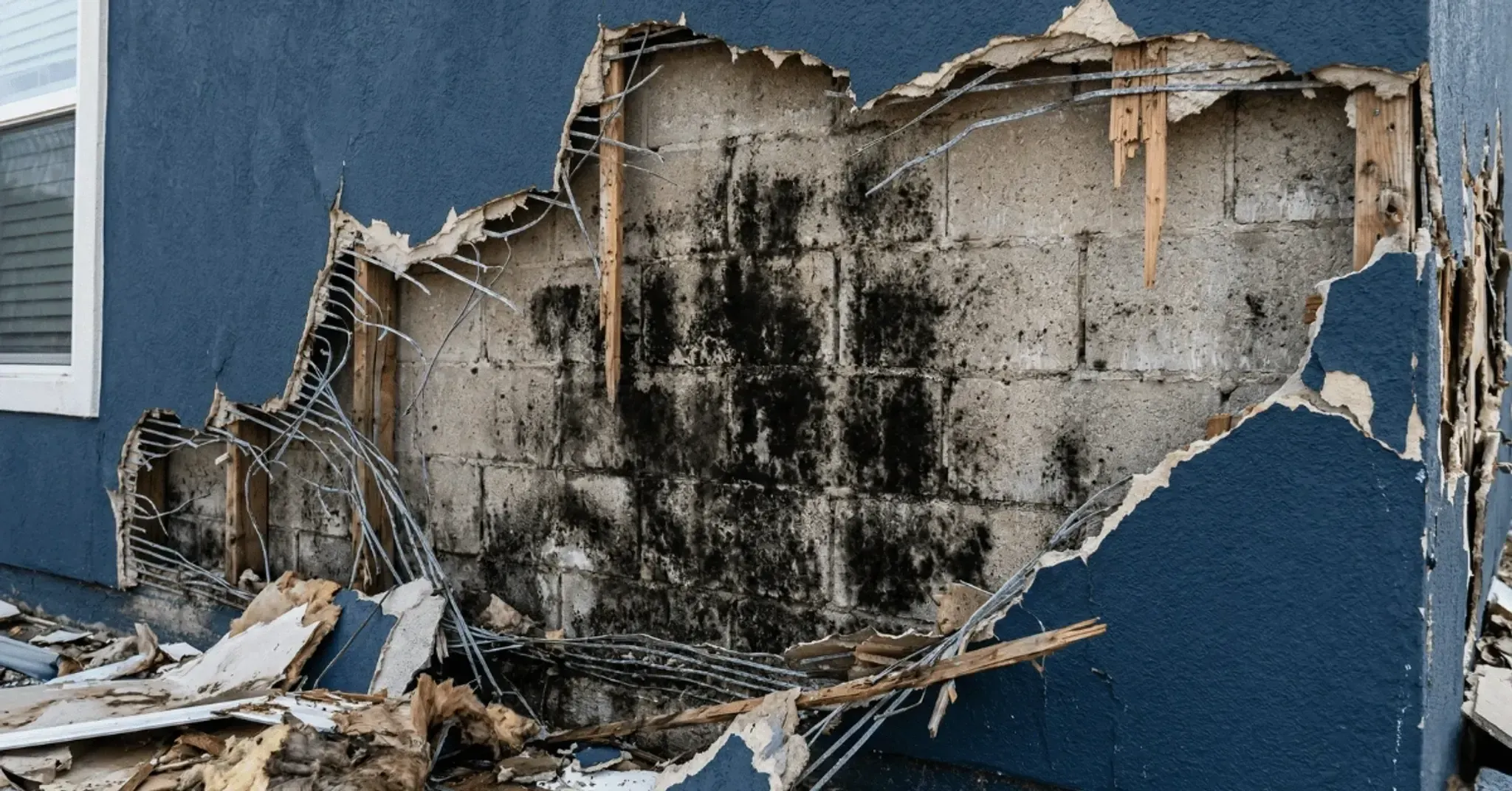

The June 2025 floods brought more than six inches of rain in just one hour.
According to San Antonio's flood response data, there were 70 water rescues along the Salado and Leon creeks. The rain stopped by the evening. The streets became dry again. But in the homes close to these creeks, water got stuck inside the walls. It sat there in darkness and heat.
You got the water out, and now the house looks dry. You called a mold company to come and test for mold later this week. But the mold is already spreading inside your walls. By the time you get your lab results, it will be too late for a controlled cleanup.
The big thing that sets a test apart from an inspection is not about getting things right. It is all about when you do it. In San Antonio's flash flood zones, timing matters the most.
The Limestone Drainage Trap
San Antonio is on the Edwards Plateau. The land here is made of limestone, and it lets water move through it very fast. When it rains on this type of land, water does not stay on top. It goes through the ground quickly and moves down. Up top, the street will be dry in just a few hours.
Water that gets inside your house does not drain as fast as water in the ground. It gets stuck between the outside foundation and the inside walls. The limestone soil does not keep this water in, so there is not any push to move the water out. It just stays there. The water dries up slowly and sends more water into the air, which can help mold grow.
Clay-based soils keep water on top and let it move slowly. You can see wet areas for many weeks. Limestone terrain works in a different way. It drains water on the surface very fast, but it holds water below the ground where you can't see it. You have less time to react because the problem is harder to spot.
The 24-Hour Growth Window
In the San Antonio summer, it gets very hot. It can be 95 degrees or more. If water gets inside, you may see mold after just one day. In wall spaces, the heat stays in and there is no airflow. This makes mold grow even faster. When water stays inside these areas for about four days, mold starts to grow a lot. It can build up in places that you can’t see.
A mold lab test can take some time. If you call on day two, the company will come out and take air and surface samples. Then, they send these tests to a lab. You get the results back in 1 to 2 business days, and you can find out if there is mold. But by then, you are on day four or five. The mold problem may have already spread to places you cannot reach easily.
A TDLR-licensed inspection takes place on the second day. By the evening of day two, you get a written report. This report shows where water is trapped, where there is mold, and what steps must take place right away. A cleanup crew can also start work that same day.
That two-day gap is the key to stopping wall cavity spread. It also decides if you need to remove the drywall.
What a Test Can't Tell You in San Antonio's Timeline
A lab test tells you just one thing. It lets you know, "What mold is here?" The answer might be, "Aspergillus fumigatus at 450 spores for each cubic meter. Yes, it is there."
Your adjuster reads this and asks you more. He wants to know where it is now. He also asks if you can still clean it without opening any walls yet. He wants to know if this is early growth or if it is already set in and hard to get out.
The test does not give you an answer. It takes a single look in time. The test does not tell you where the damage is. It does not tell you how fast the problem can spread. It also does not say if the damage stays in one spot or moves through other spaces.
A TDLR-licensed MAC checkup uses a moisture meter and a heat camera. They move through the flood area room by room. They read for moisture at the edges of the slab, inside the wall spaces, and in crawlspaces. They look for cold places where water is leaving and write down what is wet now and where mold is starting to grow. They prepare a full report within hours.
That report lets you know how urgent the problem is. Can you clean the one cracked wall and stop the problem, or do you have to open drywall in three rooms? Can you use a dehumidifier and save the framing, or do you have to replace the structure?
Why You Can't Afford to Wait for Lab Results
In Houston or Austin, when you see slow moisture problems, you have a few days or even weeks to choose what to do. In San Antonio’s flash flood areas, you only have a few hours.
If you walk into your house after a flood and see water still inside the walls or under the floor, call a TDLR-licensed person to check it out right away. You should do this that day or the next morning. Do not wait several days for a time that works better for you.
An inspection helps you plan what to do next. A test tells you if the inspection was right, but you have already made your decision by that time.
After the Water Recedes: The Hidden Moisture Problem
Limestone terrain has one more thing. It lets groundwater drain away from homes fast. But water that has already gotten inside the framing takes a long time to dry. It gets stuck in wall spaces. It can build up between the concrete and inside walls. Water can also stay in the rim joist areas in the crawlspace.
That water that gets stuck turns the area into something like a pressure cooker. It becomes easy for mold to grow because it is warm, dark, and wet. Mold will spread fast, and by the time you see stains or changes in color on the wall, the mold behind the surface has already been there for some time.
An inspection in the first 48 hours lets you see this water before you see any mold. A test one week after will show that the mold growing has already been there for five days.
The Practical Difference
You have three choices:
-
Get a test. Wait for results. By that time, mold can start to grow. Cleanup can cost a lot and you may have to open up the drywall.
-
Get an inspection on the second day. Know what is wet and what is starting to grow. Start the cleanup right away. You might be able to fix it without opening much drywall.
-
Do nothing. Wait until you smell mold or see stains. By that time, mold had been growing for weeks. Cleanup will cost more and may be hard to do.
The cost between the second and third choice is usually thousands of dollars apart.
FAQs
How soon after a San Antonio flood should I call for an inspection?
You need to check for water damage in the first 48 hours, while you can still see water. If you get an inspection during this time, you can find out where the moisture is going. This helps you act fast. If you wait a week, mold will start growing. At that point, it is harder to tell what happened.
Should I get a test instead of an inspection to save money?
Not in San Antonio. A test is $500 to $800 (more for extensive inspections). It lets you know if there is mold. An inspection is $500 to $800. This will show you where the mold is, how soon you need to fix it, and what steps to take next. You can get your money back from the inspection cost in your first cleanup choice.
What if water has already receded and the house looks dry?
Looking dry does not always mean it is dry. You should get an inspection right away and use a moisture meter. You can also call someone to check for you. Limestone walls can feel dry on top, but there might still be water inside. This hidden water can help mold grow for weeks, even after you think the water is gone.
Can I just clean up the water myself and call for testing later?
You can try, but once you clean up the water, dry things, and wipe away what you see, you have taken away what they need to check. If you have to ask for help later, the person handling your claim will want to know why you cleaned before they could see it. Let them look at things first, then clean up as they say.
What if I'm buying a home that flooded in June 2025?
Ask the seller if they have a MAC inspection report and a cleanup certificate from any past work. If they do not have these, you should get your own inspection before you move forward. Without a report from when you bought it, you cannot show what problems were there. A flood can hit San Antonio in any summer.
The Response Window You Can't Afford to Miss
Water gets into a San Antonio home. It can go away from the streets and your view in just a few hours. But mold can start growing where you can’t see it in about a day. In five days, it spreads inside the walls. After ten days, you will need to take out some of the drywall.
An inspection on the second day stops the timeline. It tells you what is happening right now and what needs to be done today. A test on the fifth day shows if the inspection found the right things. But the most important time to make a choice is already gone by then.
If you have had flood damage in San Antonio, if you live by a creek corridor, or if you want to buy a place with a history of flooding, schedule a TDLR-licensed inspection immediately. The hours you save when you call early can help you stop things from getting worse, so you can fix the problem fast.
Frequently Asked Questions
- How quickly does mold grow in San Antonio homes after flooding?
- In San Antonio's warm climate, mold can begin colonizing wet drywall, insulation, and wood framing within 48 hours of flood water contact. Visible mold growth typically appears within three to seven days. San Antonio's high summer temperatures accelerate mold development compared to cooler climates, meaning professional mold inspection should happen as soon as water extraction is complete.
- What mold types grow most commonly in San Antonio homes after flooding?
- After San Antonio flooding, the most common mold types found are Cladosporium, Penicillium, and Aspergillus species, which grow rapidly on damp drywall and wood. In cases of prolonged water exposure lasting more than 48 hours, Stachybotrys chartarum can develop on paper-faced drywall and ceiling tiles. Lab analysis from Fast Mold Testing identifies which species are present so the remediation protocol can be tailored appropriately.
- How much does a mold inspection cost in San Antonio after a flood event?
- Post-flood mold inspections in San Antonio typically cost between $500 and $800 (more for extensive inspections). Fast Mold Testing offers transparent published pricing with results in 1 to 2 business days. Testing immediately after water extraction establishes the mold baseline before remediation begins, which is essential for insurance documentation and for ensuring the contractor addresses all affected areas.
- Should San Antonio homeowners test for mold before or after insurance-funded flood repairs?
- Always test before repairs begin. A pre-repair mold inspection from Fast Mold Testing documents the full extent of mold-affected areas before contractors open walls, which prevents the contractor from missing hidden mold and ensures your insurance claim covers the complete scope of damage. Post-repair clearance testing then confirms the job was completed correctly.