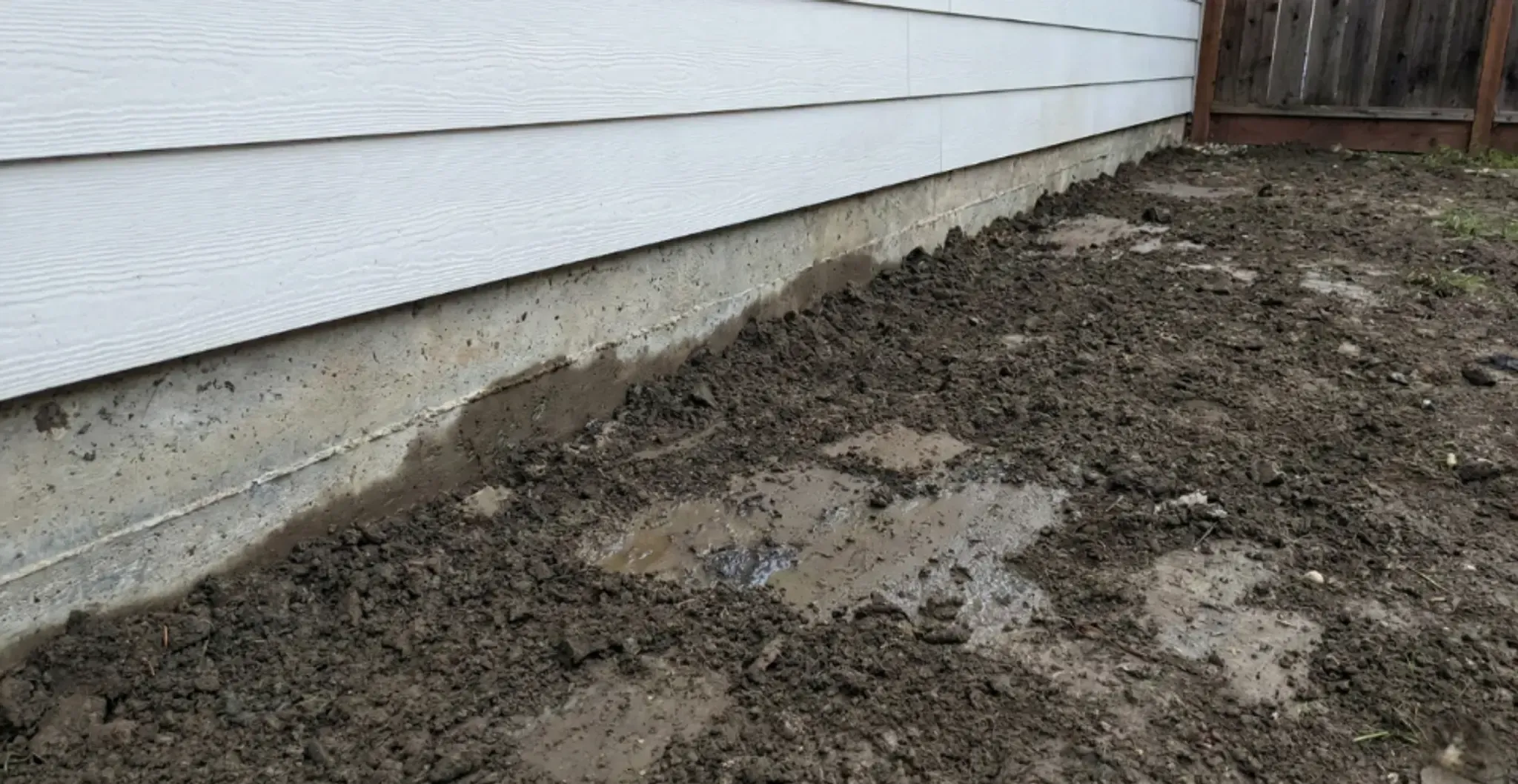

The December and January storms flooded Highway 87 and cut power across the South Bay, but their impact didn't stop when the rain did. Those storms also soaked San Jose's clay soil with weeks of water, and that soil is still wet today. Water keeps seeping up through your foundation right now, weeks after the rain stopped.
Most homeowners don't realize this is happening. Mold starts growing within 1-2 business days after getting wet, according to both the EPA and FEMA. But you won't see that mold for another 18 to 21 days, and you won't smell it either. When the musty smell finally hits your nose, you're dealing with nearly three weeks of growth.
Professional mold inspection in San Jose catches these problems while they're still hidden.
Why Your Foundation Is Still Absorbing Moisture
Three big storms hit the Bay Area between December 19 and January 6. Christmas Day brought flooding to Highway 87 near Highway 85. Valley Water declared a flood emergency. San Jose got over three inches of rain. Some areas got more. January's king tides pushed water to heights not seen since 1998.
The storms ended in early January. The moisture problem didn't.
San Jose sits on clay soil, which drains water very slowly. The water table sits just two to five feet below ground in many areas, and when builders dig for foundations, the backfill soil gets loose compared to the hard earth around it. Water pools in that loose area, creating what engineers call the "clay bowl effect."
Wet clay can stay damp for weeks, pushing water against your foundation with 60 pounds of force per cubic foot. Concrete looks solid, but it has tiny pores you can't see. Water finds its way through small cracks, comes through the joint where your floor meets the wall, and seeps through gaps around pipes.
Your foundation is likely taking in moisture right now. This water comes from storms that happened four to six weeks ago.
Mold Grows in 48 Hours But Stays Hidden for Weeks
The EPA is clear. "Dry water-damaged areas within 1-2 business days to prevent mold growth." FEMA says the same thing. "Mold colonies can start growing within 1-2 business days."
The first 24 hours, mold spores soak up water and start growing. You can't see anything yet. By hour 48, growth begins. Thin strands spread across wet surfaces. Still hidden from view. Over the next week, the colonies get bigger. You might smell something faint if your nose is sharp. Most people miss it.
Around day 18 to 21, you can see patches. The smell is clear.
That's a three-week gap. Mold started growing fast. But you didn't notice it until much later. The CDC says mold causes breathing problems. It's worse for people with asthma or allergies. A NIOSH study found mold in 47% of homes. You can't wait for signs you can see.
What Professional Testing Finds That You Can't
Moisture meters find high humidity inside walls. They don't need to cut anything open. Readings above 15 to 20 percent mean mold can grow. Thermal cameras show cold spots. Those spots mean trapped water. Air tests find mold even when it's growing inside walls or above ceilings where you can't look.
The EPA warns that mold hides in certain spots. Behind drywall. Above ceiling tiles. Under carpets. Inside walls around pipes. In air ducts. You won't find these with a quick walk through your house.
Fast Mold Testing analyzes every sample at an AIHA-accredited laboratory and delivers the full report within 1 to 2 business days of the inspection. Most companies take one to three weeks. They only do testing. They don't sell cleanup services. No conflict of interest. A microbiologist checks every test. They have InterNACHI and IAC2 certifications.
You can get same-day appointments in San Jose, Santa Clara, and Fremont.
DIY Kits vs. Professional Inspection
|
Factor |
DIY Test Kits |
Professional Inspection |
|
Cost |
$10-50 per kit |
$500–$800 (more for extensive inspections) |
|
Tools |
Surface swabs |
Moisture meters, thermal cameras, air tests |
|
Coverage |
1-2 spots |
Whole house |
|
Time |
1-3 weeks |
1-2 business days (Fast Mold Testing) |
|
Hidden Mold |
Can't find it |
Finds water behind walls |
DIY kits test one spot. If you pick the wrong spot, you get a wrong answer. The real problem might be six inches away behind the wall. After the soil got this wet in San Jose, you need to check everything.
Common Questions About Post-Storm Mold Inspection
How soon should I get tested after the storms?
Best is within 48 hours of getting wet. San Jose's clay soil is still soaked weeks later. It's not too late to test now. If you smell must, see condensation, or feel dampness, book right away.
Can I just wait to see if mold shows up?
No. Visible mold means 18 to 21 days of growth already happened. Testing catches problems before you can see them. This saves thousands in cleanup costs.
What areas get hit worst?
Crawl spaces in old homes. Outside walls facing north. Spots near downspouts. Rooms with bad air flow. Clay soil targets foundation walls where water creeps up.
How much does inspection cost?
Usually $500 to $800 (more for extensive inspections) for a full house check. This includes moisture mapping, air tests, and lab work. San Jose homes are worth $1.3 million on average. This is small money to protect a big asset.
Why pick Fast Mold Testing?
Full report within 1 to 2 business days of the inspection. Other companies take one to three weeks. They only test. No sales pressure. A microbiologist reviews results. Same-day appointments work for most people.
Test Now, Don't Wait for the Smell
San Jose's clay soil is still wet from December and January. Moisture keeps coming through foundations. Mold is growing out of sight in thousands of homes right now. By the time you smell it, weeks of growth already happened.
Book your inspection at fastmoldtesting.com/san-jose. Same-day appointments. Full report within 1 to 2 business days of the inspection. Don't wait for signs you can see.
Frequently Asked Questions
- How does San Jose's clay soil cause ongoing foundation moisture that leads to mold?
- San Jose's expansive clay soil retains water after winter rains and releases it slowly through spring and summer. This creates sustained hydrostatic pressure against concrete slab foundations and basement walls, pushing moisture into the slab and up into floor assemblies and wall bases. Unlike sandy soil that drains quickly, clay keeps foundations in a state of chronic low-level moisture that supports persistent mold growth.
- How do I know if clay soil moisture is causing mold in my San Jose home?
- Signs that clay soil moisture is feeding mold in your San Jose home include musty odors at floor level that worsen after winter rains, efflorescence on concrete garage or basement floors, moisture staining at the base of exterior-facing walls, and recurring mold on baseboards and lower drywall sections. A professional moisture meter scan along floor perimeters from Fast Mold Testing confirms whether soil-sourced moisture is the cause.
- How much does a mold inspection cost in San Jose for a clay soil moisture problem?
- Mold inspections in San Jose for clay soil foundation moisture typically cost between $500 and $800 (more for extensive inspections). Fast Mold Testing starts at our transparent rate, with the full report delivered within 1-2 business days of the inspection. The inspection focuses on floor-level and perimeter moisture mapping to trace whether the source is external soil pressure, slab capillary rise, or interior plumbing.
- What can San Jose homeowners do to stop clay soil moisture from feeding mold long-term?
- Long-term solutions for clay soil moisture mold in San Jose include improving perimeter drainage with French drains or swales, applying crystalline waterproofing to interior slab and foundation walls, and installing a dehumidifier in affected rooms. None of these measures should begin until a professional mold inspection from Fast Mold Testing confirms the moisture source and establishes a baseline that post-mitigation testing can be compared against.