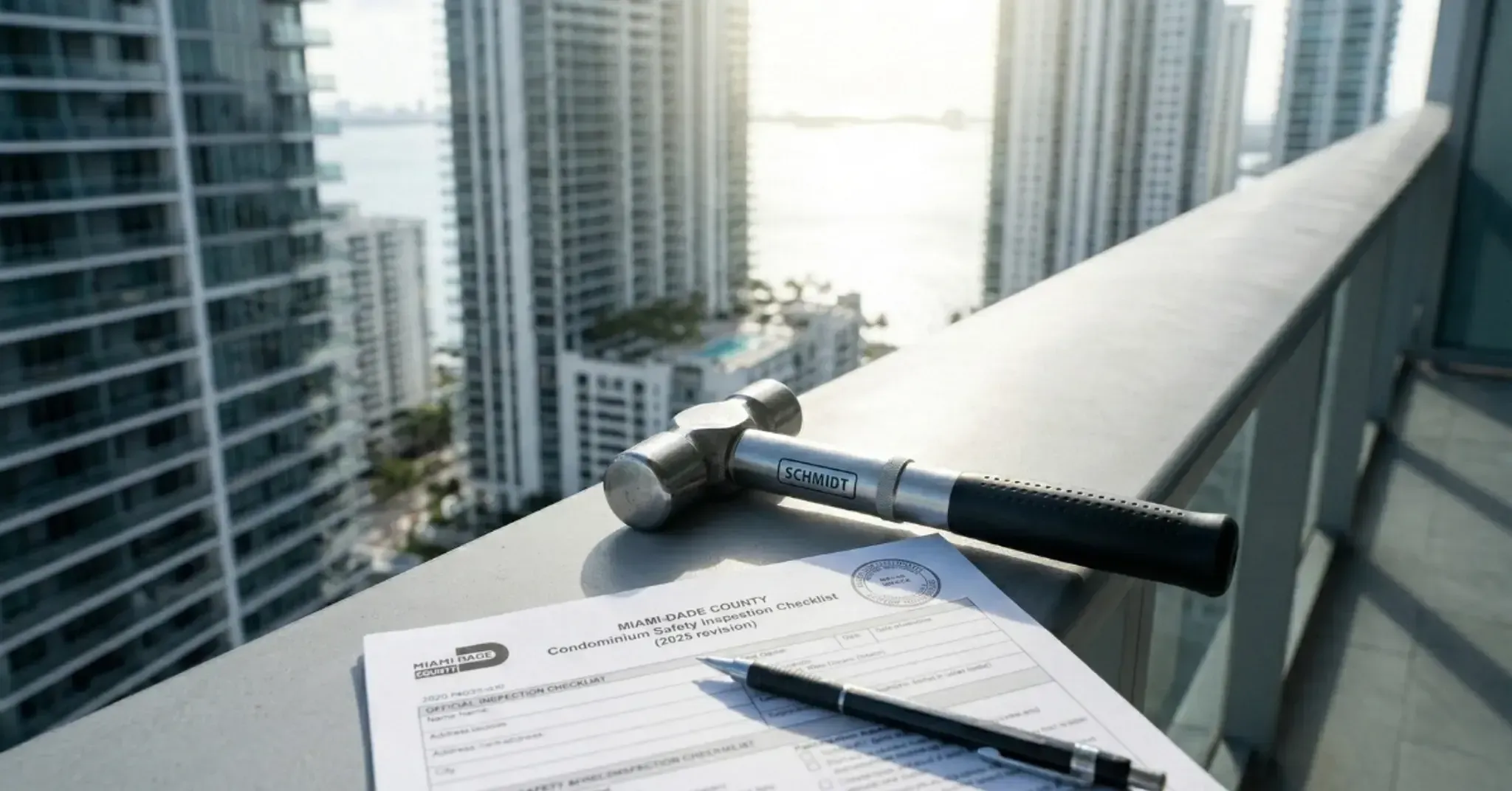

Your condo building has had a big inspection. The board sent a letter that tells you what they found. In the letter, you might see something like "water got in" or "water at the balcony slab." The board is taking steps to fix this. It may sound like everything is under control.
It is, but that is just one part. The fix handles the main part of the building. This is where water came in from outside. It will not take care of anything that was already growing inside the wall for months.
That part is for you to handle, and if you wait until the repair team leaves, your choices will not be as good. Mold testing in Miami costs between $500 and $800 (more for extensive inspections) for a full unit check. Fast Mold Testing offers transparent published pricing and you will get the results in 1 to 2 business days.
What the HOA Repair Covers and What It Doesn't
When an inspection finds water coming in, the HOA has to fix what the engineer showed. That can be a bad seal, a cracked balcony edge, or a window frame that is broken. The crew makes sure water cannot get in from outside. The HOA sees the job as finished.
No one on the board is thinking about what is inside your unit. They do not have the power to order a mold test for your place even if they wish to. Your unit is not a shared area.
The HOA takes care of the outside of the building. What you have behind your drywall is your own responsibility.
This is more important than you may think. When water gets through a balcony slab, it doesn't just stay where it comes in. In many block buildings in Miami, it moves inside the hollow space and follows the joints between the blocks. The water spreads before there is even a mark or stain on your wall.
When the inspection report was asked for, that water could have been inside your walls for months.
What Happens When the Contractor Seals the Wall Without a Mold Test
Miami's block buildings move water in the same way. It always takes the path that is open, going through hollow spaces until it stays in the air gap behind your drywall. The part you see on your wall is often not the full story. Moisture meters and special cameras can find wet spots deep inside, past what you can see with your eye.
When the crew seals up the entry spot from outside, no more water comes in. But the water that was already inside does not dry, and any mold stays there. The wall is closed with that damp stuff still trapped behind it. People do not know about it until there is a smell or the paint starts to bubble near the baseboard.
At this time, to get back into the wall, you have to ask the board to start repair work again after they have already fixed it. This is much harder than doing tests before the crew came.
Why Getting Tested Before the Repair Changes Everything
Checking before the crew gets there does two things. You can see what is in the wall while you still have a way to see it. It also gives you a dated record you can use later.
A licensed inspector comes in and uses a moisture meter and a heat camera to find any wet spots that you can't see. The report will say if there's mold, tell you what type it is, and point out where the water is coming from. That is what the crew needs to figure out so they can finish the job the right way.
If the report finds that there is mold, show it to the crew before they start work. Most Miami crews who handle milestone repairs have seen this before. They can change what they do to add mold removal to the same job. You do not have to pay two times for the work. The board also does not need to open a wall again after it has just been closed.
What to Do With the Report
Share it with the board and the repair crew before any work starts. If the HOA's crew does not handle mold removal inside units, the steps still work. The HOA seals the building from the outside. A different firm will take care of your unit. Then, the board's drywall crew will finish things up.
Fast Mold Testing Miami gives lab results in 1 to 2 business days. This works well for most repair jobs.
Keep a copy, no matter what happens. If mold comes back in the same place six months after the work, a report made before the repair that shows the problem was found and shared is very helpful. It shows one story, while not having any record at all tells a different story.
Frequently Asked Questions
Can the HOA refuse to let me test my own unit?
No. Your unit belongs to you, and you do not need board approval to bring in a mold expert for your own space. You just can not open or change any walls that are in the common area without the board saying yes. But you can choose to do testing inside your unit if you want.
Who pays for mold removal inside my unit?
It depends on your building rules and what makes the mold show up. Mold that starts inside the building, like from the balcony, the outside wall, or a broken seal, is often the HOA's job, not the unit owner's. A mold report that shows where the mold starts and shows it is from a building problem helps you get the problem fixed by the right group.
What if I wait until after the repair to check for mold?
You can still test after you fix the wall, but you will not get the most useful details. Someone checking after the wall is closed can test the air and swipe some spots, but they can't tell what is inside the closed wall. A test that comes back high shows you there is still a problem. It does not tell you where the problem is or how much there is. This makes any next steps harder to plan.
How fast can results come back?
Fast Mold Testing gives you lab results in just 1 to 2 business days. Most big repair jobs take weeks or even months to finish. So, you can usually have time to do testing before any work starts.
Your Unit Is Not Included in the HOA's Repair Scope
Miami's milestone system does its job. It looks for trouble before buildings have big problems. But it stops with the building and its structure. The people who check things do not look at what the moisture has done inside your home.
The board takes care of the common areas. You have to look after your own wall. Book a mold assessment with Fast Mold Testing Miami before the crew comes. This way, you can find out what is behind the wall before it gets closed up.
Frequently Asked Questions
- Why should Miami condo unit owners test for mold before the HOA starts milestone repairs?
- Testing before HOA milestone repairs begin gives you a documented baseline of your unit's condition before contractors open walls, disturb existing mold, or potentially spread spores to clean areas. If mold is found in your unit after repairs that were not there before, your pre-repair inspection from Fast Mold Testing is the evidence that establishes when the contamination occurred and who is responsible.
- What happens to mold inside Miami condo walls when milestone repair contractors open them?
- When contractors open walls in a Miami condo for milestone repairs, any mold hidden inside can be disturbed and release spores into the living space. Without prior containment and testing, this can spread contamination to areas that were previously clean. Unit owners who test before repairs begin can require the board to include proper containment procedures in the contractor scope of work.
- How much does a pre-repair mold inspection cost for a Miami condo unit?
- Pre-repair mold inspections for Miami condo units typically cost between $500 and $800 (more for extensive inspections). Fast Mold Testing offers transparent published pricing with results in 1 to 2 business days. The pre-repair report documents your unit's baseline condition with moisture readings and air sample results, creating the before record you need to protect your interests during and after the HOA's repair process.
- Can a Miami condo unit owner force the HOA to test for mold before starting milestone repairs?
- Unit owners cannot unilaterally stop HOA repairs, but they can request in writing that the board include mold assessment in the repair process, citing Florida Statute 718 habitability obligations. Getting your own independent inspection from Fast Mold Testing before work begins is the most reliable way to protect your interests, regardless of whether the board agrees to test.