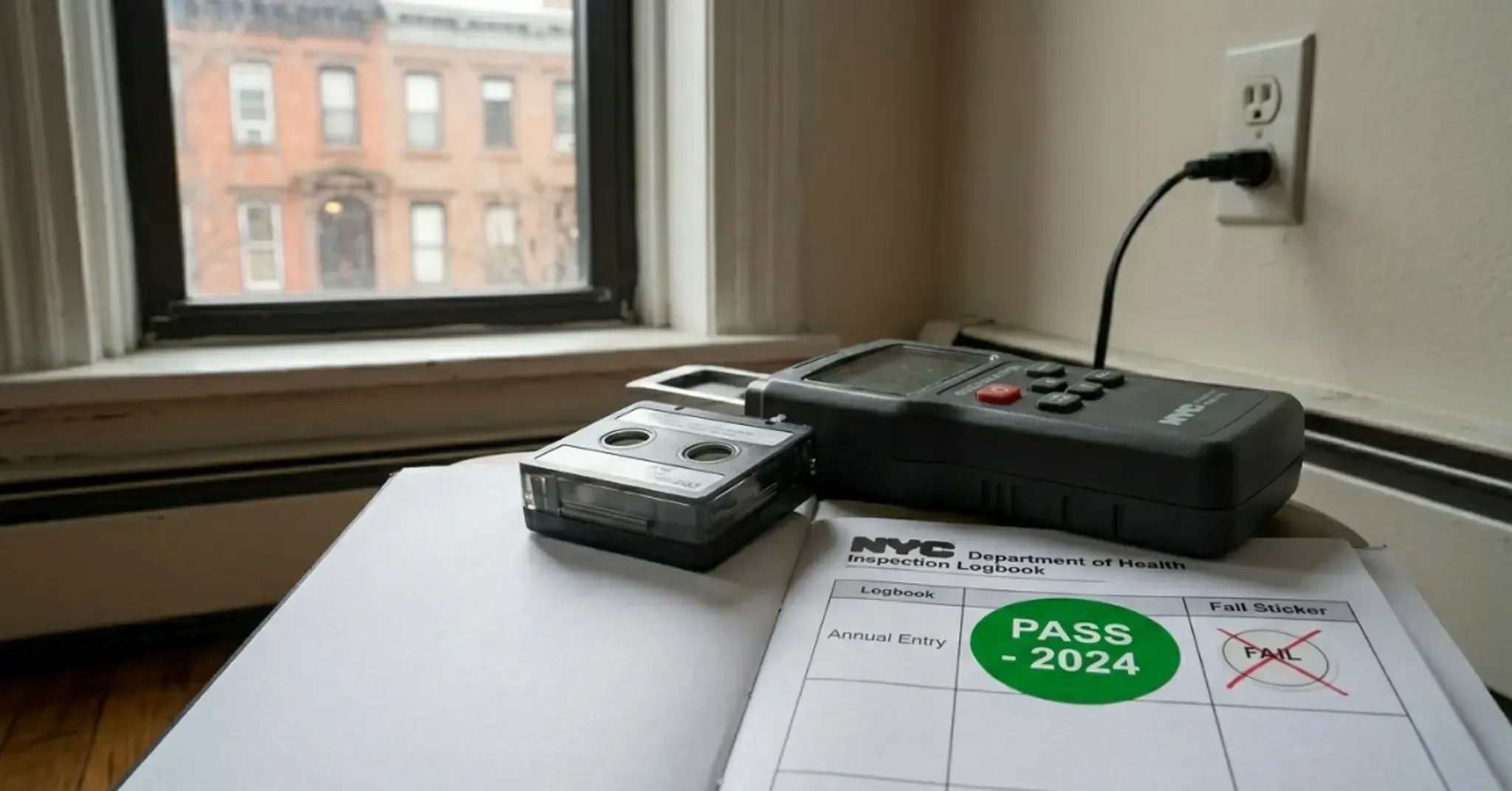

New York City put Local Law 55 in place in 2018. This rule says that landlords who have three or more units must look for mold and pests every year, inside every unit. Brooklyn has more buildings covered by this rule than any other part of the city.
Most Brooklyn landlords do not follow these rules. HPD knows about this and is beginning to push more. A first notice for mold in NYC can be from our transparent rate to $10,000. The price depends on how bad things are. HPD can make the repairs right away and send the bill to the owner. Mold testing in Brooklyn costs about $500 to $800 (more for extensive inspections). Fast Mold Testing starts at our transparent rate. You get results in 1 to 2 business days.
What Local Law 55 Actually Requires
Local Law 55 is under NYC's Indoor Allergen Law. This law is for any building that has three or more units. It includes most Brooklyn row houses that are now rentals, brownstone homes with a few families, and apartment buildings of all sizes.
The person who owns the place must go see each unit, one by one, every year. He must go look for both bugs and mold. If the owner finds mold that covers more than 10 square feet, he has to get someone who is licensed to look at mold. He also needs a different licensed company to clean up the mold. These need to be two different companies. If someone is both the mold inspector and the cleaner, that breaks Local Law 55. That is a problem on top of having mold there.
HPD's Indoor Allergen Hazards page lists the full rule, the limits, and what needs to be done after mold is found.
Why Brooklyn Buildings Are Especially Exposed
Brooklyn has a lot of old places to live. Most homes are brownstones and row houses. Many of them have been split into rentals. These places have old plaster walls, pipes that have been there a long time, and windows that can get wet on the inside. The walls are made of concrete, and water from one unit can go into another.
The moisture that lets mold grow in these buildings comes from problems with the building itself. It is not because of the people who live there. Someone who uses a humidifier in their apartment does not cause a brownstone to get mold in its outer wall. The reason for the mold is the brick, the mortar, and the flashing around the cornice.
Mold checks every year in places like these are not just to follow the law. They help spot problems early, so a little wet spot does not turn into a big mess to clean.
Buildings with basement units face more problems with wetness. A wet basement is a problem by itself in Brooklyn. This even happens in the ground-floor units, even if no one uses the basement.
What HPD Enforcement Looks Like Now
HPD makes sure that Local Law 55 is followed by using its program and by listening to people's complaints. If you let HPD or 311 know about a problem, HPD will come out for a visit. When the city person finds mold and sees that there has not been a recent visit by the landlord, the landlord will be given a notice from HPD.
The notice gives the owner time to fix the problem. If the owner does not get back, HPD can start urgent repairs. The city sends its own team, does the work, and then sends the owner a bill. Bills for urgent repair from HPD are usually much higher than the market price for this work.
Repeat notices go to the Housing Part of Housing Court. A building owner who gets mold notices over and over can get fines. In some cases, the owner may get orders that say they cannot get rent. HPD has been taking this step more often since 2022.
How Annual Inspections Protect the Landlord, Not Just the Tenant
A good checkup every year does three things for the person who owns the place. It follows the rules. It makes a record with a date that shows the owner looked at the place. This can help if someone who rents the place says there was a problem some time later. It can also spot mold when it's small and easy to fix, before it spreads and gets much worse.
The 10-square-foot rule is important here. If the area is smaller than this, the owner can clean up the mess without a special company. If the area is bigger, you need both a licensed checker and worker, and the price goes up fast. Checks every year help keep most problems under this size.
Fast Mold Testing Brooklyn checks rental buildings once each year and gives lab results in 1 to 2 business days. For someone who owns a few small buildings with three to six units, doing all units at one time helps keep the cost for each unit low.
Frequently Asked Questions
Does Local Law 55 apply to my building if I live in it?
Yes, if the building has three or more units in all. This includes the unit where the owner stays. The owner does not get a special rule for rental buildings in this case. Every year, they look at all the units in the building.
What counts as a compliant check under Local Law 55?
The check needs to show any mold or moisture that you can see in each unit. It needs to be on file.
HPD has not said that the visit for mold each year needs to be done by someone who has a license. But if you find mold that is more than 10 square feet, then you do need someone with a license right away. When you use someone with a license for the yearly visit, it gives you a better record.
My building had a mold violation two years ago. What now?
A past HPD notice lets HPD know about the building. If there is a new problem, HPD will pay attention faster and trust the building less. The smartest thing to do now is to have a check every year to show the problem was fixed and it did not come back. These records show HPD and any housing court judge more than just old notice history.
Can a tenant withhold rent over a mold violation?
No, not by itself. In New York, to hold back rent, you must follow a process. You have to report the problem to HPD first and let the person who owns your place try to fix it. But if HPD sends several warnings that this person ignores, you as the person who lives there can ask for an order to lower your rent. It is better to keep up with Local Law 55 than to deal with this big problem later.
The Notice Costs More Than the Inspection
Local Law 55 has been in place since 2018. HPD started to enforce it right away. Now, they are going faster with it. Brooklyn landlords who do not follow the rule each year may feel little pressure now. But the risk gets bigger and more clear each year.
The inspection does not cost much. What costs more is the HPD notice, a big repair bill, and going to housing court. Book a yearly look for your Brooklyn building through Fast Mold Testing Brooklyn and keep a record. This record helps you if a tenant complaint comes up.
Frequently Asked Questions
- What does Local Law 55 require Brooklyn landlords to do about mold each year?
- NYC Local Law 55 says Brooklyn landlords who own three or more units need to look at every unit every year to check for mold. If they find mold that covers more than ten square feet, they must get a licensed mold expert and get another licensed person to fix it. HPD can fine them from our transparent rate up to $10,000 if they do not follow these rules.
- Can Brooklyn tenants force their landlord to comply with Local Law 55 mold inspections?
- Yes, Brooklyn tenants can put in an HPD complaint if their landlord has not done the needed Local Law 55 mold check each year. A private mold check report from Fast Mold Testing helps the complaint. It shows the mold problem and that the landlord did not follow the rules.
- How much does a mold inspection cost in Brooklyn for a building covered by Local Law 55?
- A mold inspection in Brooklyn for a building covered by Local Law 55 usually costs between $500 and $800 (more for extensive inspections) for each unit. Fast Mold Testing charges our transparent rate to start and gives results in 1 to 2 business days. Landlords who need to get several units checked at once can lower the price for each unit by booking all their inspections with one company.
- What penalties do Brooklyn landlords face for ignoring Local Law 55 mold requirements?
- Brooklyn landlords who do not follow Local Law 55 mold rules can get HPD fines from our transparent rate to $10,000 for each issue. City workers may also do emergency repairs and send the bill to the property. A public record of the issue can hurt the money, insurance, and value of the building.